
DIY Homemade Dog Food Ideas: Tips and Recipes to Nourish Your Best Friend
- Joseph Wharram

- Jan 14
- 4 min read
Feeding your dog well is one of the most loving things you can do. But have you ever stopped to think about what’s really in those commercial dog foods? Many dog owners don’t realize the scale of the problem hidden in some store-bought options. That’s why I want to share with you some DIY homemade dog food ideas that are not only healthy but also easy to prepare and are significantly more cost effective than the latest human grade dog foods available. When you make your dog’s meals at home, you take control of their nutrition and well-being. Let’s dive into how you can start this rewarding journey.
Why Choose Homemade Dog Food Ideas?
You might wonder, why bother making dog food at home? The truth is, many commercial dog foods contain fillers, artificial preservatives, and low-quality ingredients that can affect your dog’s health over time. When you prepare food yourself, you know exactly what goes into every bite. This means fresher ingredients, balanced nutrition, and meals tailored to your dog’s specific needs.
Making homemade dog food also allows you to avoid common allergens or ingredients your dog might be sensitive to. Plus, it’s a wonderful way to bond with your furry friend. Imagine the joy of seeing your dog eagerly enjoy a meal you lovingly prepared!
Here are some benefits of homemade dog food:
Better ingredient quality: You choose fresh, whole foods.
Customizable recipes: Adjust for allergies, age, or health conditions.
No hidden additives: Avoid artificial colors, flavors, and preservatives.
Improved digestion and energy: Many dogs thrive on fresh, natural diets.
Essential Tips for Making Homemade Dog Food
Before you start cooking, there are some important things to keep in mind. Dogs have different nutritional needs than humans, so it’s crucial to balance their meals properly. Here are some tips to help you get started safely and effectively:
1. Consult Your Veterinarian
Always talk to your vet before switching your dog to homemade food. They can help you understand your dog’s specific dietary needs and recommend supplements if necessary. This step ensures your dog stays healthy and happy.
2. Balance Protein, Carbs, and Fats
Dogs need a good balance of protein, carbohydrates, and fats. Protein is essential for muscle health, carbs provide energy, and fats support skin and coat health. A typical homemade dog meal might include:
Protein: chicken, turkey, beef, fish, or eggs
Carbohydrates: rice, sweet potatoes, oats, or quinoa
Vegetables: carrots, green beans, peas, or broccoli
Healthy fats: olive oil, fish oil, or flaxseed oil
3. Avoid Toxic Foods
Some human foods are toxic to dogs. Never include onions, garlic, grapes, raisins, chocolate, or anything with xylitol. These can cause serious health problems.
4. Cook Thoroughly but Avoid Overcooking
Cook meats and vegetables well to kill bacteria and make digestion easier. However, avoid overcooking as it can destroy nutrients.
5. Use Supplements Wisely
Structured and well balanced ingredients will elevate the need to use supplements however sometimes due to specific health issues your vet may suggest the need for higher levels of specific nutritional aspects primarily vitamins or minerals.
6. Start Slowly
Transition your dog gradually to homemade food by mixing it with their current food over a week. This helps prevent digestive upset.
Easy and Nutritious Homemade Dog Food Recipes
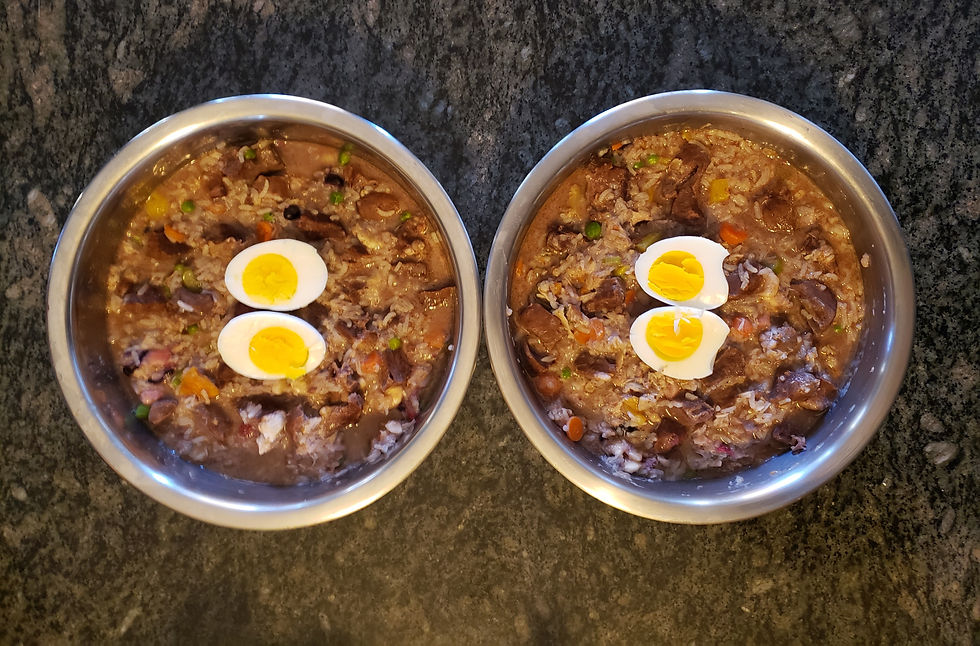
"Making Your Own Dog Food with Ramses Recipes" provide well balanced and complete, easy to prepare. recipes you can try at home. They use common ingredients and are designed to be balanced and tasty.
Superior Homemade Dog Food - One of the Ramses Recipes
How to Store and Serve Homemade Dog Food
Once you’ve made your dog’s meals, proper storage is key to keeping the food fresh and safe. Here’s what I recommend:
Refrigerate: Store homemade dog food in airtight containers in the fridge for up to 2 days.
Freeze: For longer storage, freeze portions in meal-sized containers or bags. Thaw in the fridge overnight before serving.
Serve at room temperature: Dogs prefer food that’s not too cold. Let refrigerated food sit out for 10-15 minutes before feeding and/or reheat for 1-2 minutes in a microwave (dependent on quantity). Test with your finger to ensure its not too hot.
Portion control: Measure your dog’s daily food amount based on their weight, age, and activity level. Your vet can help with this.
By following these tips, you’ll keep your dog’s meals fresh and delicious every time.
Taking Action: Protect Your Dog’s Health Today
I encourage you to take a closer look at what your dog is eating. The commercial pet food industry is huge, but not always transparent. By choosing to make your own dog food, you’re stepping up to protect your dog’s health in a powerful way. You’ll see the difference in their energy, coat shine, and overall happiness.
If you want to learn more about dog nutrition and safe homemade recipes, check out this helpful resource. It’s packed with expert advice and ideas to keep your dog thriving.
Remember, your dog depends on you for their well-being. Homemade dog food is a loving, practical way to give them the best life possible. Start small, experiment with recipes, and watch your dog flourish.
I hope these DIY homemade dog food ideas inspire you to take control of your dog’s nutrition. It’s easier than you think, and the rewards are priceless. Your dog will thank you with every wag of their tail!


Comments