
Supporting Dogs with Liver Disease

The Ramses Food-First Approach

Dogs with liver disease require a carefully structured diet that supports liver function while complementing ongoing veterinary treatment. Proper nutrition maintains muscle mass, energy levels, and overall wellbeing, while minimizing metabolic stress on a compromised liver. The foundation of a liver-friendly diet includes high-quality proteins, moderate fats, gentle carbohydrates, targeted vitamins and minerals, and low-sugar antioxidant fruits. Careful portioning, preparation, and feeding frequency are critical to maximizing digestibility and nutrient absorption.
1. Proteins – Liver-Friendly and Easily Digestible
Proteins are essential for tissue repair, muscle maintenance, and immune support. In dogs with liver disease, excessive or poor-quality protein can overburden the liver, leading to toxin buildup. Focus on lean, high-quality protein sources that provide essential amino acids while being gentle on the liver.
Recommended Protein Sources:
Lean muscle meats: chicken, turkey, or allergy-friendly alternatives such as rabbit, venison, duck, or white fish
Eggs (cooked) for complete protein and choline
Small oily fish (sardines, mackerel, anchovies) for omega-3 fatty acids
Organ meats: heart prioritized (low-fat), liver and kidney restricted to ~5% each of total daily protein
Feeding Guidelines:
Cook, shred, chop, or puree for digestibility
Divide total daily protein into 3–5 small meals to reduce liver workload
Amalgamate protein sources to meet total daily protein targets
Dog-Size Daily Protein Targets
Miniature 20g, Small 40g, Medium 80g, Large 120g, Giant 160g, Giant Plus 200g
Portions include muscle meat, fish, eggs, and organ meats combined, following the liver-specific organ meat breakdown.
2. Fats – Moderate, Easily Digested
Fats supply concentrated energy and essential fatty acids while supporting skin, coat, and cellular health. In liver-diseased dogs, moderate, high-quality fats provide benefits without overloading liver metabolism.
Recommended Fat Sources:
Small oily fish / fish oil (EPA/DHA for anti-inflammatory support)
Coconut oil (medium-chain triglycerides, easily digestible)
Olive oil (antioxidant-rich, easily metabolized)
Feeding Guidelines:
Introduce gradually and mix into meals
Avoid fried, processed, or heavily seasoned fats
Monitor stool consistency and tolerance
Dog-Size Daily Fat Recommendations
Dog Size | Fish Oil / Small Oily Fish | Coconut Oil | Olive Oil | Total Fat / Day |
Miniature | ½ tsp | ¼ tsp | ¼ tsp | 1 tsp |
Small | 1 tsp | ½ tsp | ½ tsp | 2 tsp |
Medium | 2 tsp | 1 tsp | 1 tsp | 4 tsp |
Large | 3 tsp | 1½ tsp | 1½ tsp | 6 tsp |
Giant | 4 tsp | 2 tsp | 2 tsp | 8 tsp |
Giant Plus | 5 tsp | 2½ tsp | 2½ tsp | 10 tsp |
Total fat includes all sources combined and should be divided across meals.
3. Carbohydrates – Gentle Energy and Digestive Support
Carbohydrates provide digestible energy, soluble fiber, and antioxidants while supporting gut health. For dogs with liver disease, easily digestible starches and fibrous vegetables reduce metabolic stress while maintaining steady energy.
Recommended Carbohydrate Sources:
Sweet potatoes, pumpkin, butternut squash (cooked and mashed)
Rice or oatmeal (cooked)
Clarifications:
Amounts reflect cooked weight
Listed amounts are minimum daily portions, which can be gradually increased up to 10% of total daily food intake under veterinary guidance
Dog-Size Daily Carbohydrate Recommendations
Dog Size | Sweet Potato / Pumpkin / Squash (g) | Rice or Oatmeal (g) | Total Carbohydrate / Day |
Miniature | 8 | 7 | 15 |
Small | 15 | 15 | 30 |
Medium | 30 | 30 | 60 |
Large | 45 | 45 | 90 |
Giant | 60 | 60 | 120 |
Giant Plus | 75 | 75 | 150 |
Feeding Guidelines:
Serve cooked, mashed, or pureed for easier digestion
Offer in smaller, frequent meals
Monitor tolerance and adjust if digestive upset occurs
4. Vitamins & Minerals – Liver Regeneration & Antioxidant Protection
Dogs with liver disease often experience deficiencies in vitamins and minerals due to malabsorption or altered metabolism. Whole-food sources provide antioxidant protection, support liver detoxification pathways, and maintain energy metabolism.
Recommended Sources:
Vegetables: carrots, spinach, kale (small amounts)
Medicinal mushrooms: Reishi, Shiitake, Maitake
Flaxseed (ground)
Lean meats, eggs
Clarifications:
Portions are minimum daily amounts, cooked or prepared for digestibility
Practical minimum: ≥2 g for measurement feasibility
Introduce one ingredient at a time to monitor tolerance
Dog-Size Daily Vitamin & Mineral Portions
Dog Size | Vegetables / Mushrooms (g) | Flaxseed (Ground) (g) | Total / Day |
Miniature | 5 | 2 | 7 |
Small | 10 | 2 | 12 |
Medium | 20 | 3 | 23 |
Large | 30 | 5 | 35 |
Giant | 40 | 7 | 47 |
Giant Plus | 50 | 10 | 60 |
Feeding Guidelines:
Steam vegetables lightly to preserve nutrients
Mix into meals gradually and monitor tolerance
Combine with proteins, fats, and carbohydrates for a balanced diet
5. Fruits – Low-Sugar, Antioxidant-Rich (Liver-Disease Adjusted)
Fruits provide antioxidants to reduce oxidative stress but must be low in sugar for dogs with liver disease. Liver-disease-adjusted portions are intentionally smaller than standard recommendations to protect liver function while still delivering antioxidant support.
Recommended Fruit Sources:
Blueberries, strawberries, blackberries, apple (without seeds)
Clarifications:
Amounts are total daily portions for all fruits combined, not per individual fruit
Introduce gradually and monitor tolerance
Dog-Size Daily Fruit Portions
Dog Size | Total Fruit / Day (g) |
Miniature | 2 |
Small | 5 |
Medium | 10 |
Large | 15 |
Giant | 20 |
Giant Plus | 25 |
Feeding Guidelines:
Serve sliced, mashed, or lightly cooked
Integrate with meals, spread throughout the day
Monitor tolerance and adjust as needed
Ramses Key Principles for Liver-Disease Nutrition
Provide a food-first, balanced approach, integrating protein, fats, carbohydrates, vitamins/minerals, and fruits.
Prepare foods to optimize digestibility: finely chopped, shredded, mashed, or pureed as required.
Feed small, frequent meals to reduce liver workload and enhance nutrient absorption.
Follow liver-disease-specific adjustments: organ meat distribution, fruit portion reductions, measurable minimum portions.
Veterinary oversight is essential: monitor liver function, nutrient tolerance, and adjust the plan as needed.
Summary
Dogs with liver disease need a structured diet to support liver function alongside veterinary care. Key principles include high-quality proteins, moderate fats, gentle carbohydrates, targeted vitamins/minerals, and low-sugar fruits, all served in small, frequent meals.
Lean meats, eggs, and small oily fish provide digestible protein, while heart is prioritized and liver/kidney limited (~5% each of total daily protein). Fats from fish oil, coconut oil, and olive oil supply energy and reduce inflammation. Cooked vegetables, pumpkin, squash, rice, and oatmeal provide fiber and gentle energy, while whole-food sources like mushrooms and flaxseed supply vitamins and minerals.
Low-sugar fruits — blueberries, strawberries, blackberries, and apples — offer antioxidants, with daily portions calculated as a total for all fruits combined. All ingredients should be cooked, mashed, or pureed as needed, introduced gradually, and monitored for tolerance.
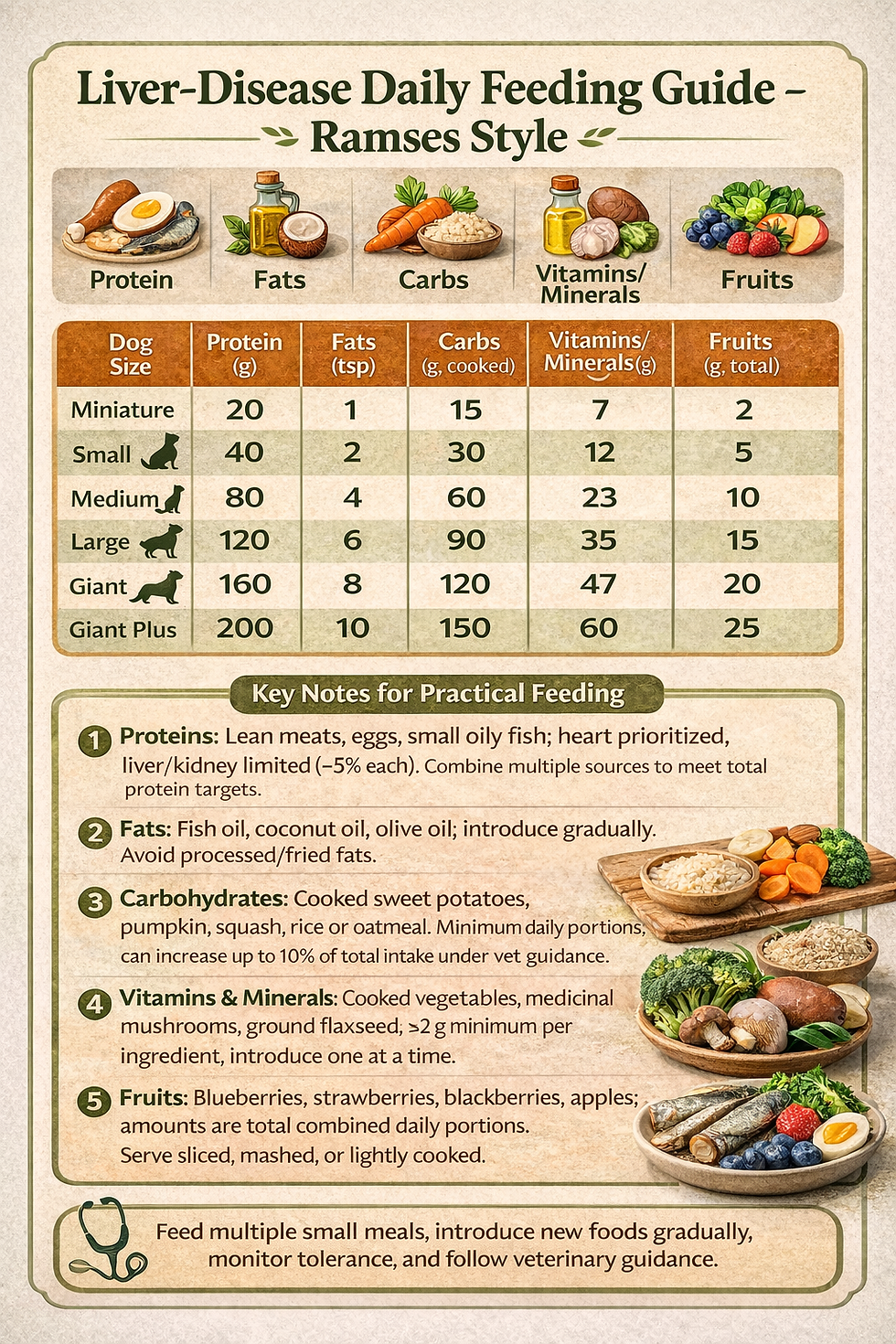
This practical, food-first approach, combined with veterinary oversight, helps reduce liver stress, maintain muscle and energy, and support long-term health in dogs with liver disease.
For more insights into Homemade Dog Food for dogs of all ages explore the Ramses Series.


Comments